The short answer: the toys that win against a phone are the ones a child does something with, not the ones that entertain them. That means building sets, pretend play, music, and active games like bowling. The American Academy of Pediatrics (AAP) advises avoiding screen media for children younger than 18 to 24 months, except video calls with family. For ages 2 to 5, it advises limiting screens to about one hour a day of good-quality content, watched with a parent where possible.
We are a toy shop, so we have an obvious opinion here. Still, the guidance is real, and so is the problem: a toy has about ten minutes to compete with a cartoon. Here is what we see working.
Quick picks
| Toy | Type of play | Price | Why it holds attention |
|---|---|---|---|
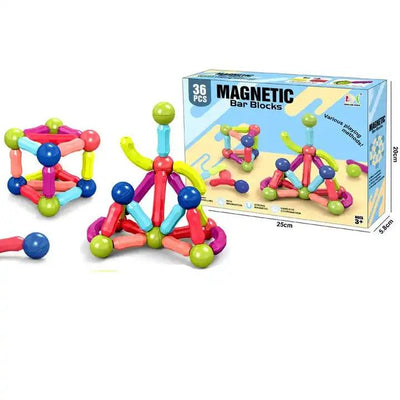
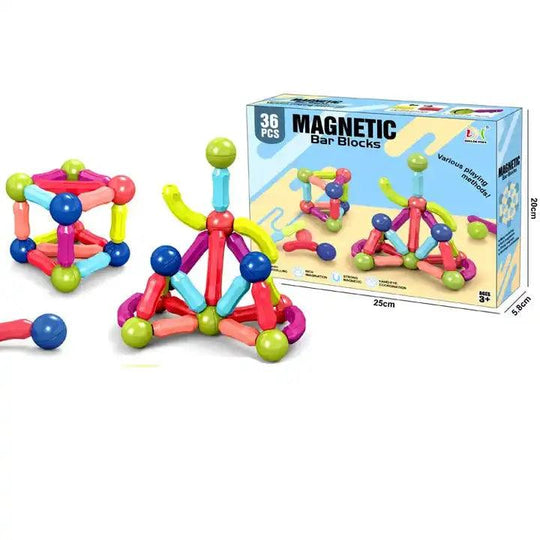
| Magnetic Building Bar Blocks | Building, 3+ | Rs 2,825 | 36 pieces, and every build is different. |
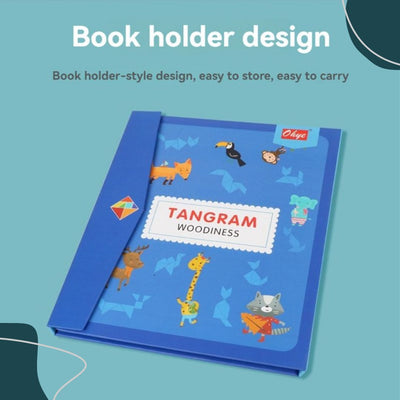
| Magnetic Tangram Puzzle Book | Puzzle | Rs 1,675 | 96 patterns that get harder, in a book-sized case for travel. |
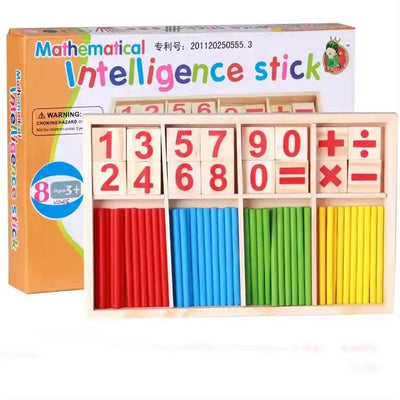
| Wooden Math Counting Sticks | Early maths | Rs 1,500 | Number tiles and counting sticks. Sums done with hands, not taps. |
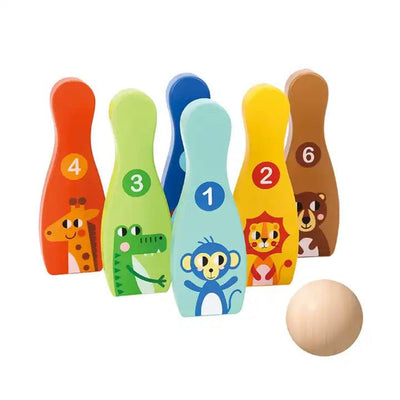
| Animal Friends Bowling Game | Active, 3+ | Rs 1,800 | Six numbered wooden pins. It gets them off the sofa. |
| Wooden Xylophone, 8 notes | Music | Rs 1,000 | Sound only comes when they strike a bar. No buttons, no recorded tunes. |
| Kids Cookware Playset | Pretend play, 3+ | Rs 5,725 | Pressure cooker, kettle, pan and play food for "cooking for everyone". |
Prices checked on the site on 30 October 2026.
How much screen time is OK for my child's age?
The AAP's guidance for families, published on its parent website HealthyChildren.org, is roughly:
- Under 18 to 24 months: avoid screen media, except video calls.
- 2 to 5 years: about one hour a day of high-quality programmes, ideally watched together.
- 6 and up: consistent family limits, so screens don't replace sleep, outdoor play and time together.
The World Health Organization's 2019 guidelines for under-5s also recommend no sedentary screen time for children under 2, and no more than one hour a day for ages 2 to 4. Your paediatrician knows your child, so ask them if you are unsure.
Why do screens win, and how can toys compete?
Screens win because the child does nothing and something exciting still happens. Toys win when the child makes something happen. That is why toys that "do everything" (lights, songs, a button for every animal) are often dropped as fast as a cartoon. The child is still just watching. The toys that last are open-ended: there is no single right way to use them.
the phone gets put down faster when the toy is already out on the floor.
What kind of toys work best instead of screens?
- Building: magnetic bars, tiles and blocks. A child can build for an hour because the goal keeps changing. Our guide to magnetic tiles vs bars vs blocks explains which suits which age.
- Puzzles with levels: the tangram book has 96 patterns, from simple shapes to full pictures, so it grows with them.
- Pretend play: a kitchen, a doctor set, a cleaning trolley. This is where children talk most, to themselves and to you.
- Music: a xylophone makes a sound only when they play it. Pure cause and effect.
- Active games: bowling, bubbles and ball games, which burn energy that otherwise turns into "can I have the phone?"
How do I actually get my child to pick a toy over a tablet?
- Put the toy out before the screen time usually starts. A set already on the mat gets played with. A set in a cupboard does not.
- Rotate. Keep a few toys away and swap them in each week. "New" toys beat old ones.
- Play for the first ten minutes. Most children keep going on their own once a game has started.
- Swap screens for a routine, not for nothing. For example: after school, bowling in the corridor, then the tablet.
Do I need "educational" toys?
Not specially labelled ones. Most good toys are educational in the plain sense: counting pins, sorting shapes, naming food in a pretend kitchen. Our counting sticks are the most direct "learning" toy here, with printed number and operator tiles and colour-coded sticks. But a bowling set teaches counting too, and children don't notice.
How ordering from Little Explorers works
- Cash on Delivery across Pakistan. No card needed.
- Delivery: Rs 200 on orders under Rs 5,000, and free on orders of Rs 5,000 or more.
- How fast: Islamabad and Rawalpindi in about 24 hours, Karachi in 2–3 working days, and the rest of Pakistan in 3–5 working days.
- Wrong or faulty item? WhatsApp us within 7 days of delivery and we'll exchange it. We don't give cash refunds, and refunds are given as a store voucher.
- Rated 4.9 out of 5 by more than 140 customers.
- Questions? WhatsApp 0329 5118418.
Questions parents ask
How much screen time is OK for a 3 year old?
The American Academy of Pediatrics advises about one hour a day of high-quality content for children aged 2 to 5, ideally watched with a parent. The WHO recommends no more than one hour a day for ages 2 to 4.
Should a 1 year old watch TV or a phone?
The AAP advises avoiding screen media for children younger than 18 to 24 months, except video calls. The WHO recommends no sedentary screen time under age 2.
What toys can replace a mobile phone for kids?
Open-ended toys: building sets, puzzles with levels, pretend play sets, simple instruments and active games like bowling. Toys that do everything by themselves tend to be dropped as quickly as a screen.
Are wooden toys better than plastic?
Not automatically. What matters is whether the child has to do the playing. A wooden xylophone or counting set works well because it is simple, but a good plastic building set works just as well.